Introduction: The Queen's Fortress
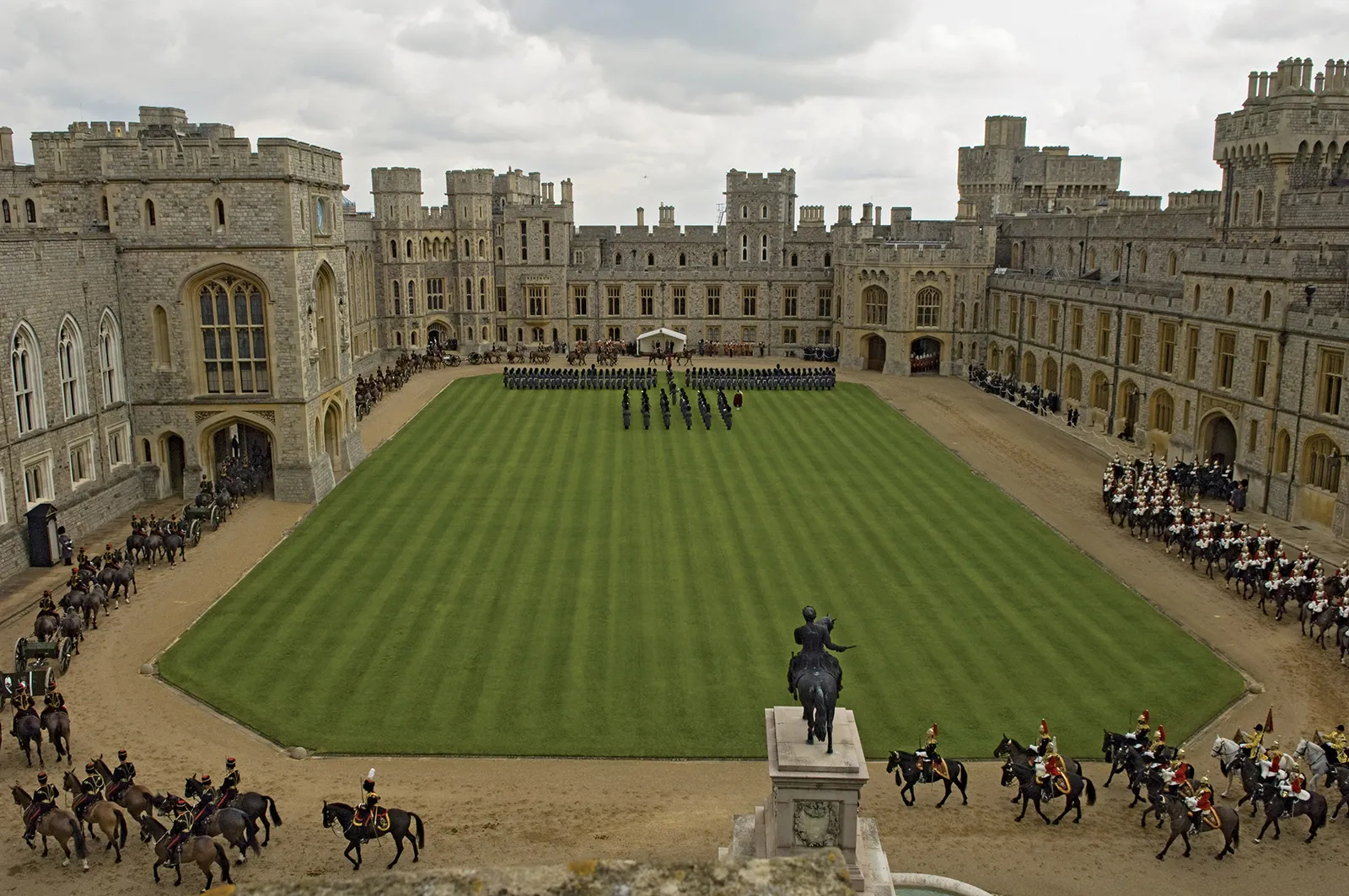
Rising above the River Thames just to the west of London, Windsor Castle is a powerful symbol of the British Monarchy. It holds the title of the oldest and largest occupied castle in the world, having been a home to 40 monarchs since William the Conqueror founded it in the 11th century.
Unlike a museum that is frozen in time, Windsor is a working palace. It was the preferred weekend home of the late Queen Elizabeth II and remains a venue for state banquets and official royal entertaining. Its grey stone walls, rounded towers, and manicured grounds enclose a site that is both a fortress and a home, reflecting the changing tastes and needs of royalty over nearly a millennium.
St George's Chapel
Within the castle precincts lies St George's Chapel, one of the finest examples of Perpendicular Gothic architecture in England. With its spectacular fan-vaulted ceiling, it is the spiritual home of the Order of the Garter, the oldest and most senior order of chivalry in Britain.
The chapel is also a royal mausoleum. It is the final resting place of ten monarchs, including Henry VIII (buried alongside his favorite wife, Jane Seymour) and Charles I (whose head was reunited with his body here after his execution). Most recently, it hosted the committal service for Queen Elizabeth II, who now rests in the King George VI Memorial Chapel. The sense of history here is palpable; walking over the ledger stones of kings, one walks through the pages of history books.
The State Apartments
The State Apartments exemplify the changing styles of monarchical "good taste." They are a sequence of magnificent rooms used by the King and members of the Royal Family for official visits. The principal rooms were created for Charles II in the 17th century and later remodelled by George IV in the 19th century, resulting in some of the most lavish interiors in the country.
The ceilings are painted by Antonio Verrio, depicting monarchs ascending to heaven or being crowned by gods. The walls are hung with masterpieces from the Royal Collection, including works by Rembrandt, Rubens, Canaletto, and Van Dyck. The sheer amount of gold leaf, velvet, and intricate wood carving can be overwhelming, but it serves its purpose: to impress upon the visitor the power and majesty of the Crown.
Rising from the Ashes: The 1992 Fire
On 20 November 1992, a fire broke out in the Queen's Private Chapel. It raged for 15 hours, destroying 115 rooms, including nine State Rooms. It was a national tragedy and a personal blow to the Queen, who dubbed 1992 her "Annus Horribilis."
However, the restoration that followed was a triumph of modern craftsmanship. Using traditional techniques and materials, the damaged areas were painstakingly rebuilt. The new Lantern Lobby, designed to replace the destroyed chapel, is a modern Gothic masterpiece in oak. It stands as a testament to the resilience of the castle and the skill of British artisans.
Queen Mary's Dolls' House
On a completely different scale is Queen Mary's Dolls' House. Built between 1921 and 1924, this is the most famous dolls' house in the world. It is not a toy, but a perfect 1:12 scale replica of an aristocratic home, complete with electricity, running water, and working lifts.
The attention to detail is obsessive. The library contains miniature books written specially by authors like Sir Arthur Conan Doyle and Rudyard Kipling. The wine cellar is stocked with real vintage wine (in tiny bottles). It captures the domestic life of the 1920s in frozen perfection, charming visitors of all ages.
Visitor Guide and Tips
Planning Your Visit
Tickets: Purchase online. The Castle can close at short notice for state events.
Location: Windsor, Berkshire SL4 1NJ. Accessible by train from London
Paddington or Waterloo.
Opening Times:
Mar-Oct: 10:00 - 17:15
Nov-Feb: 10:00 - 16:15
Closed Tuesdays and Wednesdays.
Changing of the Guard
The Changing of the Guard takes place within the castle precincts (usually on Thursdays and Saturdays at 11 am). It is far easier to see here than at Buckingham Palace, offering a great view of the soldiers and the band marching through the town.
The Long Walk
After visiting the castle, walk down the Long Walk in Windsor Great Park. This 2.6-mile tree-lined avenue offers the classic view of the castle looking back, perfect for photos.
Conclusion
Windsor Castle is unique in its longevity and continuity. It is a place where the history of the British monarchy is not just remembered, but lived. From the ancient stones of the Norman keep to the personal touches of the modern Royal Family, it bridges the gap between the medieval and the modern world. A visit here is a walk through British history, set against a backdrop of architectural splendour and royal tradition.