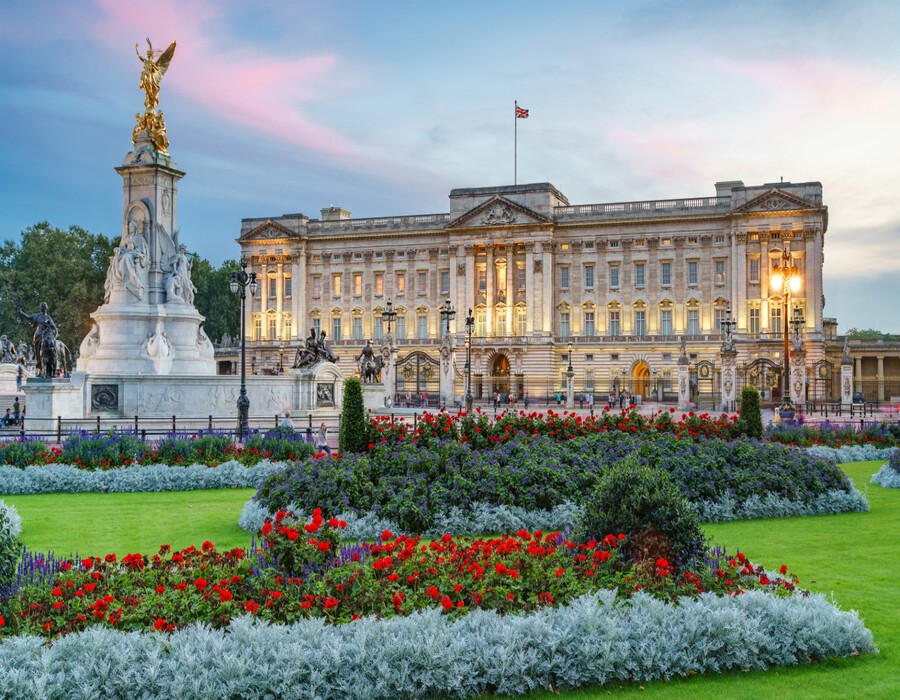
Introduction: The Most Famous House in Britain
Buckingham Palace is the administrative headquarters of the monarch of the United Kingdom and a global icon. Located in the City of Westminster, the palace is often at the centre of state occasions and royal hospitality. It has been a focal point for the British people at times of national rejoicing and mourning.
Originally known as Buckingham House, the building at the core of today's palace was a large townhouse built for the Duke of Buckingham in 1703. It was acquired by King George III in 1761 as a private residence. It was not until the accession of Queen Victoria in 1837 that it became the official royal residence. Today, it houses 775 rooms, including 19 State Rooms, 52 Royal and guest bedrooms, 188 staff bedrooms, 92 offices and 78 bathrooms.
Changing of the Guard
For many visitors, Buckingham Palace IS the Changing of the Guard. This formal ceremony, where the New Guard exchanges duty with the Old Guard, is a display of British military precision and pageantry. The soldiers, famous for their bearskin hats and red tunics, are not just ceremonial; they are active-duty soldiers from the Household Division.
The ceremony usually takes place at 11:00 am on scheduled days (daily in summer, alternating days in winter). It is free to watch, but crowds are immense. The best spots are on the Victoria Memorial or along The Mall.
Inside the Palace: The State Rooms
While the Queen (and now the King) lives there, the State Rooms are open to the public for 10 weeks each summer and on selected dates during winter and spring. These are the public rooms where the monarch receives, rewards, and entertains the subjects and visiting dignitaries.
The interiors are dazzling. The Throne Room, with its pink damask and pair of thrones chairs, is often used for royal wedding photos. The White Drawing Room, accessible via a secret door disguised as a mirror and cabinet, is where the King meets guests before a reception. The Ballroom is the largest room, set up for State Banquets with gold plate and floral displays. The collection of art on the walls—Vermeers, Rembrandts, Rubens—is one of the finest in private hands.
The Royal Balcony
The east front of the palace contains the famous balcony, where the Royal Family gathers to wave to the crowds on momentous occasions. From the end of World War II to the Platinum Jubilee, this balcony has provided the stage for the nation's history. It is the defining image of the British Monarchy: the family united, acknowledging the people.
The Royal Mews
Adjacent to the palace is the Royal Mews, one of the finest working stables in existence. Here, visitors can see the historic carriages and coaches used for royal processions, including the Diamond Jubilee State Coach and the spectacular Gold State Coach, which has been used at every coronation since George IV. It weighs four tons and needs eight horses to pull it!
Visitor Guide and Tips
Planning Your Visit
State Rooms: Only open when the King is not in residence (usually July -
September). Booking is absolutely essential.
Location: London SW1A 1AA. Nearest tubes: Victoria, Green Park, St James's
Park.
Is the King Home?
Look at the flag flying above the palace. If it is the Royal Standard (red, yellow, and blue), the King is in residence. If it is the Union Jack, he is not.
The Garden
Some tours include access to the Palace Garden. It is a 39-acre oasis in central London, with a lake, tennis courts, and a helicopter pad. It is the setting for the famous Garden Parties.
Conclusion
Buckingham Palace is the face of the United Kingdom to the world. It represents tradition, duty, and continuity. Whether you are peering through the gates to catch a glimpse of a guard, or marvelling at the Porcelain in the State Rooms, a visit here is an encounter with the living history of the monarchy. It is the perfect end to a tour of Britain's top attractions, bringing the story right up to the present day.